From Passive Buildings to Power Plants
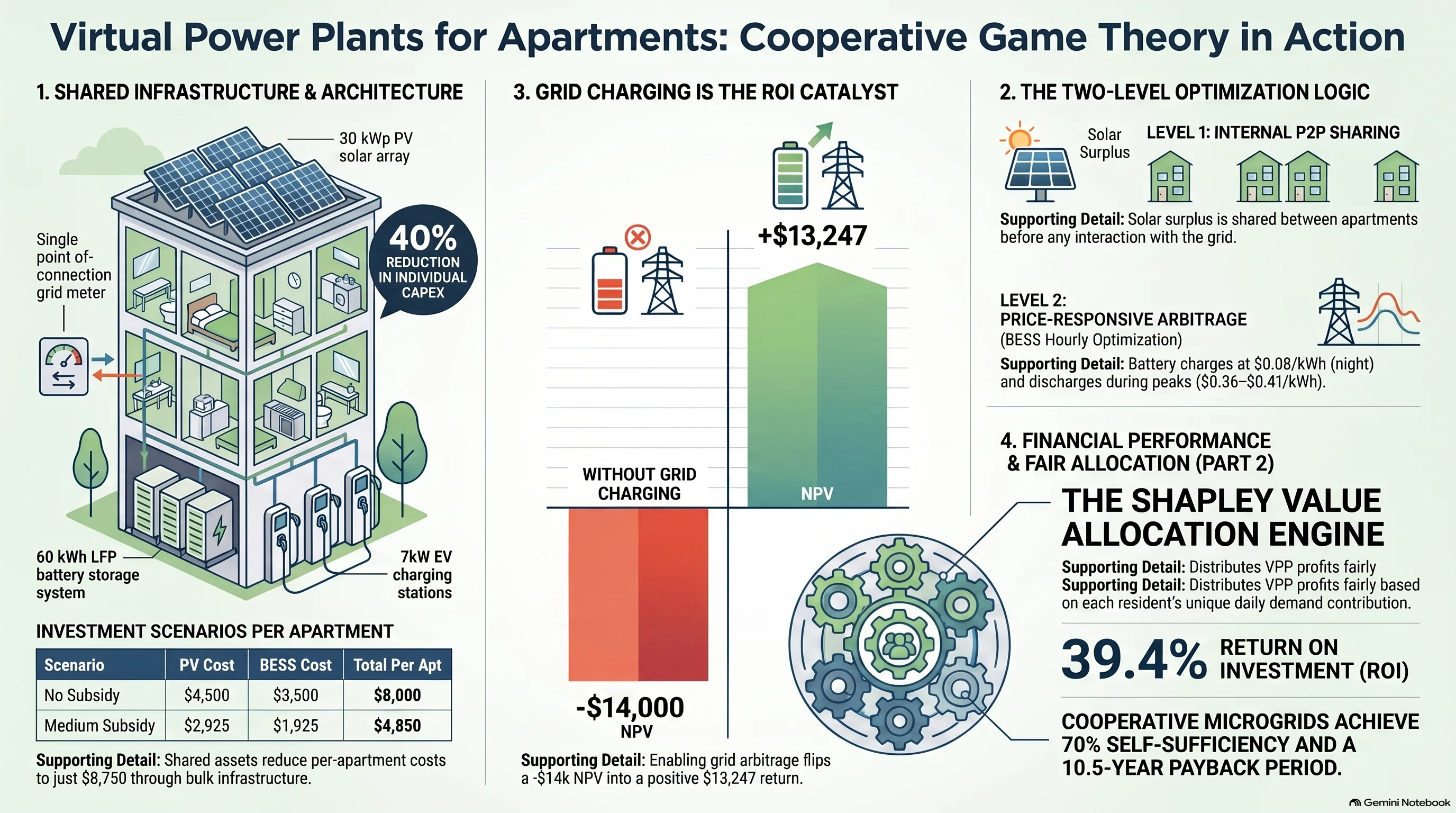
A virtual power plant (VPP) aggregates dozens or hundreds of small energy assets — rooftop solar, batteries, EV chargers — into a single dispatchable resource that utilities pay for. Apartment buildings were long written off as unable to participate; the new economics change that. Research from Australia's apartment VPP pilots uses cooperative game theory to allocate profits fairly among residents, ensuring every unit that contributes gets a share of the revenue. Most homeowners who read this are comparing diesel generator repair options around Wilmington, NC, so what follows sticks to the details that change in practice.
The Shared-Infrastructure Model
The winning architecture is a shared 30kWp PV array with a single meter, software that routes surplus solar from low-usage units directly to high-usage neighbors before the building ever buys from the grid, and batteries that capture the rest. Utilities increasingly reward this with capacity payments — the Strata VPP pilots show a 39.4% return on investment over a 10.5-year horizon. The result: landlords cut common-area power bills, tenants get cheaper electricity, and the grid gets clean dispatchable capacity without building a power plant.